Does this embed properly? With cool css syntax coloring?
From Extending JavaScript Arrays by "pradeep"
Tuesday, September 21, 2010

Thursday, September 09, 2010
Even a broken clock...
Until today there has been absolutely nothing that Glenn Beck has said that I did not wish I had never heard in the first place. His rhetoric is usually so inflammatory and stupid that it is impossible to escape it from either the reverent right or the lampooning left.
Surely you've heard about the plan hatched by Pastor Terry Jones of the Dove World Outreach Center church in Gainesville, Florida to hold a good old-fashioned down home book-burning of exclusively the Islamic holy book the Quran on September 11th.
Apparently so has Mr. Beck, and he weighed in with his opinion in this blog post.
And besides, burning the Quran, and building a mosque two-blocks north of Ground Zero are not the same things at all.
But go on...
This sounds measured and calm. It sounds well-reasoned. It actually sounds rather Christian in the idealistic turn-the-other-cheek sense of the word.
Well (almost) good for you Mr. Beck. You (almost) got one right this time.
Surely you've heard about the plan hatched by Pastor Terry Jones of the Dove World Outreach Center church in Gainesville, Florida to hold a good old-fashioned down home book-burning of exclusively the Islamic holy book the Quran on September 11th.
Apparently so has Mr. Beck, and he weighed in with his opinion in this blog post.
What is wrong with us? It’s just like the Ground Zero mosque plan. Does this church have the right? Yes. Should they? No. And not because of the potential backlash or violence.Update: Okay, no. The mosque is not being planned to be built on Ground Zero, for one thing. If it was, that might be a little weird. Calling it the "Ground Zero mosque" is just a straight up lie.
And besides, burning the Quran, and building a mosque two-blocks north of Ground Zero are not the same things at all.
But go on...
We must be the better person. We must be bigger than our problems. Bigger than the times in which we live. Burning the Koran is like burning the flag or the Bible. You can do it, but whose heart will you change by doing it? You will only harden the hearts of those who could be moved. None of those who are thinking about killing us will be affected, but our good Muslim friends and neighbors will be saddened. It makes the battle that they face inside their own communities even harder.What?
This sounds measured and calm. It sounds well-reasoned. It actually sounds rather Christian in the idealistic turn-the-other-cheek sense of the word.
Well (almost) good for you Mr. Beck. You (almost) got one right this time.
Monday, May 10, 2010
Facebook is beating Google in the race to invade your privacy
The following write-ups are the reasons I have become convinced that Facebook needs to be stopped.
Top Ten Reasons You Should Quit Facebook:
http://www.rocket.ly/home/2010/4/26/top-ten-reasons-you-should-quit-facebook.html
And...
Robert Scoble of Rackspace was kicked off Facebook for trying to import his personal information into a third-party app for synchronizing his contacts (his account was re-activated, but imagine if you *weren't* Robert Scoble of Rackspace):
http://scobleizer.com/2008/01/03/ive-been-kicked-off-of-facebook/
All this, along with the most recent Facebook insanity packaged as "feature" and unleashed upon its users, to my mind makes Facebook the far and away winner in the race to eradicate our privacy online.
Google's still a contender, but somehow I still trust Google. I mean, Google has never intentionally locked me out of my e-mail account because of some perceived violation of its nebulous terms-of-service. Nor has Google prevented me from retrieving my contact information. In fact, Google has facilitated the transferring, exporting, copying, and sharing of my own personal data through the availability of its application programming interfaces and online software labs.
 You simply must check out this rather frightening infographic which is found over at Matt McKeon's website. McKeon is a software developer in the Visual Communication Lab at IBM Research's Center for Social Software.
Also, from Boing Boing's fascinating post which lays out the exposition of Facebook's march towards its Orwellian market share of your personal information -- a quote from Tim Spalding:
Top Ten Reasons You Should Quit Facebook:
http://www.rocket.ly/home/2010/4/26/top-ten-reasons-you-should-quit-facebook.html
And...
Robert Scoble of Rackspace was kicked off Facebook for trying to import his personal information into a third-party app for synchronizing his contacts (his account was re-activated, but imagine if you *weren't* Robert Scoble of Rackspace):
http://scobleizer.com/2008/01/03/ive-been-kicked-off-of-facebook/
All this, along with the most recent Facebook insanity packaged as "feature" and unleashed upon its users, to my mind makes Facebook the far and away winner in the race to eradicate our privacy online.
Google's still a contender, but somehow I still trust Google. I mean, Google has never intentionally locked me out of my e-mail account because of some perceived violation of its nebulous terms-of-service. Nor has Google prevented me from retrieving my contact information. In fact, Google has facilitated the transferring, exporting, copying, and sharing of my own personal data through the availability of its application programming interfaces and online software labs.
You simply must check out this rather frightening infographic which is found over at Matt McKeon's website. McKeon is a software developer in the Visual Communication Lab at IBM Research's Center for Social Software.Also, from Boing Boing's fascinating post which lays out the exposition of Facebook's march towards its Orwellian market share of your personal information -- a quote from Tim Spalding:
Why do free social networks tilt inevitably toward user exploitation? Because you're not their customer, you're their product.So, you tell me. What's the difference between a human product, and a slave? Remember, it is a fallacious argument to suggest that any rights to one's own personal information have been given up just because one voluntarily signs an EULA.
Friday, May 07, 2010
Sequel
Michael Granger's blog mentions this awesome little piece of ruby database modeling/persistence tech called Sequel.
Sequel appears to be the best alternative to ActiveRecord that I have ever seen. Probably.
This is how you connect to a DB:
Sequel appears to be the best alternative to ActiveRecord that I have ever seen. Probably.
This is how you connect to a DB:
DB = Sequel.connect('postgres://localhost/blog?user=user')Tuesday, May 04, 2010
Ron Paul: Obama is a 'corporatist', not a socialist
Here's the text of an e-mail I sent to Representative Ron Paul (R-Texas) today.
Dear Representative Paul:
I have been an admirer of yours for years now. I was very disappointed that you did not win the presidential nomination of your party in 2008. I wish you the best of outcomes in the coming election. I believe our country needs people like you in our government, and it makes me hopeful that our government can be reigned in by the people, when we have representation like you.
I have a question regarding something that you apparently said during your time at the Southern Republican Leadership Conference, as quoted in a Wall Street Journal piece a month ago in April.
http://blogs.wsj.com/washwire/2010/04/10/ron-paul-barack-obama-is-not-a-socialist/tab/article/
You said, regarding President Obama, "In the technical sense, in the economic definition, he is not a socialist, [...] He’s a corporatist, [meaning he takes] care of corporations and corporations take over and run the country."
I was wondering, could you please expound on this?
I am also against corporate interests having as much influence as they do on our country, particularly how much influence corporations seem to have over the USDA, the FEC, the FDA, the FCC, and the Federal Reserve.
I understand how you might believe that President Obama is interested in continuing a government-planned economy (which I am against in principle), but I am having trouble understanding why you think that the President is a corporatist in light of his response to the landmark Supreme Court decision in Citizens United v. Federal Election Commission, 558 U.S. (2010) during his State of the Union Address this year.
Can you help me understand your opinion on this matter?
Thank you, and God bless,
-Nels
Thursday, April 22, 2010
Facebook doesn't care about your privacy


This:
 What the hell? How does it know that none of my friends already clicked the thumbs-up icon button to indicate that they liked that web page? If my friends had liked the web page that I was viewing, how does it know who my friends are?
Facebook's new "Personalization" web feature. The Personalization feature is a little bit of code that web authors and bloggers can put on their web pages.
This code "phones home" to Facebook every time you access that page. This is not very new. Trackers and web hit counters do this all the time and generate marketing information and ad success rates. But the key here is that Facebook knows exactly who you are and what precisely you are viewing on the web.
Sites accessing the Personalization feature have access to all your public Facebook information, which includes your name, profile picture, gender, and friend and fan page connections.
Considering that Facebook's Personalization code can be placed on any web page on the Net, it seems that this has some pretty broad privacy implications. I have turned off the feature in the privacy settings of my Facebook account. It was on by default, and the introduction page that was splashed on my profile announcing it's arrival did not explain how to turn it off.
Protect your privacy -- turn off Facebook's Personalization feature that tracks your activity on the web by following these steps:
- Go to your profile, and bring up the "Account" menu, and choose "Privacy Settings" from the drop-down.
- Click on the "Application and Websites" link.
- In the section "Instant Personalization" for "Control[ing] how select partners can personalize their features with my public information when [you] first arrive on their websites", click the "Edit Setting" button.
- Make sure that the check-box for on this page is unchecked. Apparently, once you have removed the check from this box, your setting will be saved.
The cookie used by the Personalization widget is your Facebook cookie. That cookie is stored in your web browser. So every time the Personalization code phones home it sends your user name to Facebook, along with the URL of the website making the request to access your information.
Do you see how easy it is for Facebook (and other sites) to keep a log of every single website that you visit? So long as their code is used often enough by people who write the websites that you visit, eventually Facebook can collect a pretty good profile of your web usage.
It's one thing for Facebook to know who all your friends are simply because they help you keep in touch with them. But now Facebook can know things about you that are well beyond information about your social connections. As of this post, this is the default setting -- their new feature defaults to spying on you.
Are you comfortable with that?
Sunday, April 18, 2010
Monday, March 29, 2010
Gravity might be entropy
And entropy is a loss of quantum information in matter.
Tonight I read an article about some ideas on entropy and gravity that seemed to suggest that gravity is somehow an outcome of the complex relationship of the quantum information, or states, of the subatomic particles that make up matter.
Trying to understand this, I'm imagining that a chunk of space dust: not much matter, not many subatomic particles in various states of interaction. Big planet with lots of matter: lots of subatomic particles, all in various quantum states, all interacting in complex ways.
Jae-Weon Lee at Jungwon University in South Korea seems to have some pretty advanced ideas about gravity and quantum information. His theory seems to arise from Landauer's principle which suggests that data erasure or merging of computational paths results in more entropy. Entropy is basically just the loss of structure or information.
The article doesn't really get into the details of how changes to subatomic particles' quantum states actually causes gravity. I guess I'll have to do some more reading on the subject to get a better handle on the ideas.
But the article did remind me of some ideas I was playing with a few weeks ago now.
The Earth is a pretty bizarre place sometimes. Life on this planet seems to organize itself in ways that seem so, well, disorganized. Nature is almost always portrayed in stories and films as a wild, uncontrollable, random place where nothing makes sense, and everything is in constant flux. This idea seems to be deeply entrenched in Western thought -- the idea that the natural world of life on this planet is chaotic. Even deeper thinkers tend to imply that its patterns are spontaneous and simply the inevitable result of mathematical coincidence.
 What if life itself is the result, or embodiment of entropy? The most chaotic environment I can imagine is when the universe was theoretically just a hot plasma soup. All that energy began to condense into matter and collect in gravity pools and spin around singularities. Eventually matter seems to have somehow organized itself into reproductive patterns -- life. But why?
What if the mathematically chaotic patterns that we observe in nature are a sort of response to gravity and the loss of information?
It almost seems as if this planet's life is itself intent on escaping Earth's gravity. Single-celled organisms writhe and wiggle about in fluid. Fish propel themselves through the oceans. Amphibians drag themselves ashore and lurk about. Insects burrow and crawl and dart and fly. Mammals run and swim. Birds soar. Anything, any movement, it seems. To ever stop is just to die.
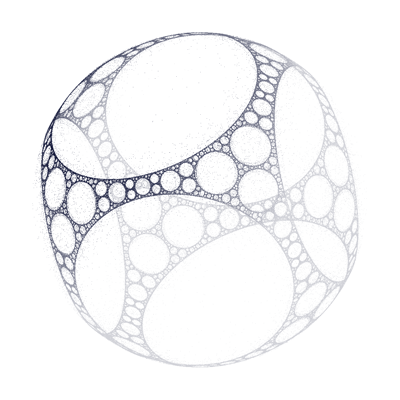
As if gravity somehow represents death, while at the same time being the womb of life. As though the vastness of space were the ultimate destination of life, and the one true outcome of order from chaos. Every creature, toiling forwards, gazing upwards, arms outstretched, wings unfurled, desperate to escape the clutches of their origin.
 As if life was intent only on filling up the voids of the universe with the energy represented and embodied by its patterns. The proportions of energy represented by an individual life form are astronomical when observed at the sub-atomic level, but spread throughout an organism, mechanically organized energy propels life into patterns of events that play out through time in what seems like nothing more than chaos.
Almost certainly, I don't know what I'm talking about, but ideas are fun to play with.
Tonight I read an article about some ideas on entropy and gravity that seemed to suggest that gravity is somehow an outcome of the complex relationship of the quantum information, or states, of the subatomic particles that make up matter.
Trying to understand this, I'm imagining that a chunk of space dust: not much matter, not many subatomic particles in various states of interaction. Big planet with lots of matter: lots of subatomic particles, all in various quantum states, all interacting in complex ways.
Jae-Weon Lee at Jungwon University in South Korea seems to have some pretty advanced ideas about gravity and quantum information. His theory seems to arise from Landauer's principle which suggests that data erasure or merging of computational paths results in more entropy. Entropy is basically just the loss of structure or information.
The article doesn't really get into the details of how changes to subatomic particles' quantum states actually causes gravity. I guess I'll have to do some more reading on the subject to get a better handle on the ideas.
But the article did remind me of some ideas I was playing with a few weeks ago now.
The Earth is a pretty bizarre place sometimes. Life on this planet seems to organize itself in ways that seem so, well, disorganized. Nature is almost always portrayed in stories and films as a wild, uncontrollable, random place where nothing makes sense, and everything is in constant flux. This idea seems to be deeply entrenched in Western thought -- the idea that the natural world of life on this planet is chaotic. Even deeper thinkers tend to imply that its patterns are spontaneous and simply the inevitable result of mathematical coincidence.
What if life itself is the result, or embodiment of entropy? The most chaotic environment I can imagine is when the universe was theoretically just a hot plasma soup. All that energy began to condense into matter and collect in gravity pools and spin around singularities. Eventually matter seems to have somehow organized itself into reproductive patterns -- life. But why?What if the mathematically chaotic patterns that we observe in nature are a sort of response to gravity and the loss of information?
It almost seems as if this planet's life is itself intent on escaping Earth's gravity. Single-celled organisms writhe and wiggle about in fluid. Fish propel themselves through the oceans. Amphibians drag themselves ashore and lurk about. Insects burrow and crawl and dart and fly. Mammals run and swim. Birds soar. Anything, any movement, it seems. To ever stop is just to die.
As if gravity somehow represents death, while at the same time being the womb of life. As though the vastness of space were the ultimate destination of life, and the one true outcome of order from chaos. Every creature, toiling forwards, gazing upwards, arms outstretched, wings unfurled, desperate to escape the clutches of their origin.
As if life was intent only on filling up the voids of the universe with the energy represented and embodied by its patterns. The proportions of energy represented by an individual life form are astronomical when observed at the sub-atomic level, but spread throughout an organism, mechanically organized energy propels life into patterns of events that play out through time in what seems like nothing more than chaos.Almost certainly, I don't know what I'm talking about, but ideas are fun to play with.
Subscribe to:
Posts (Atom)